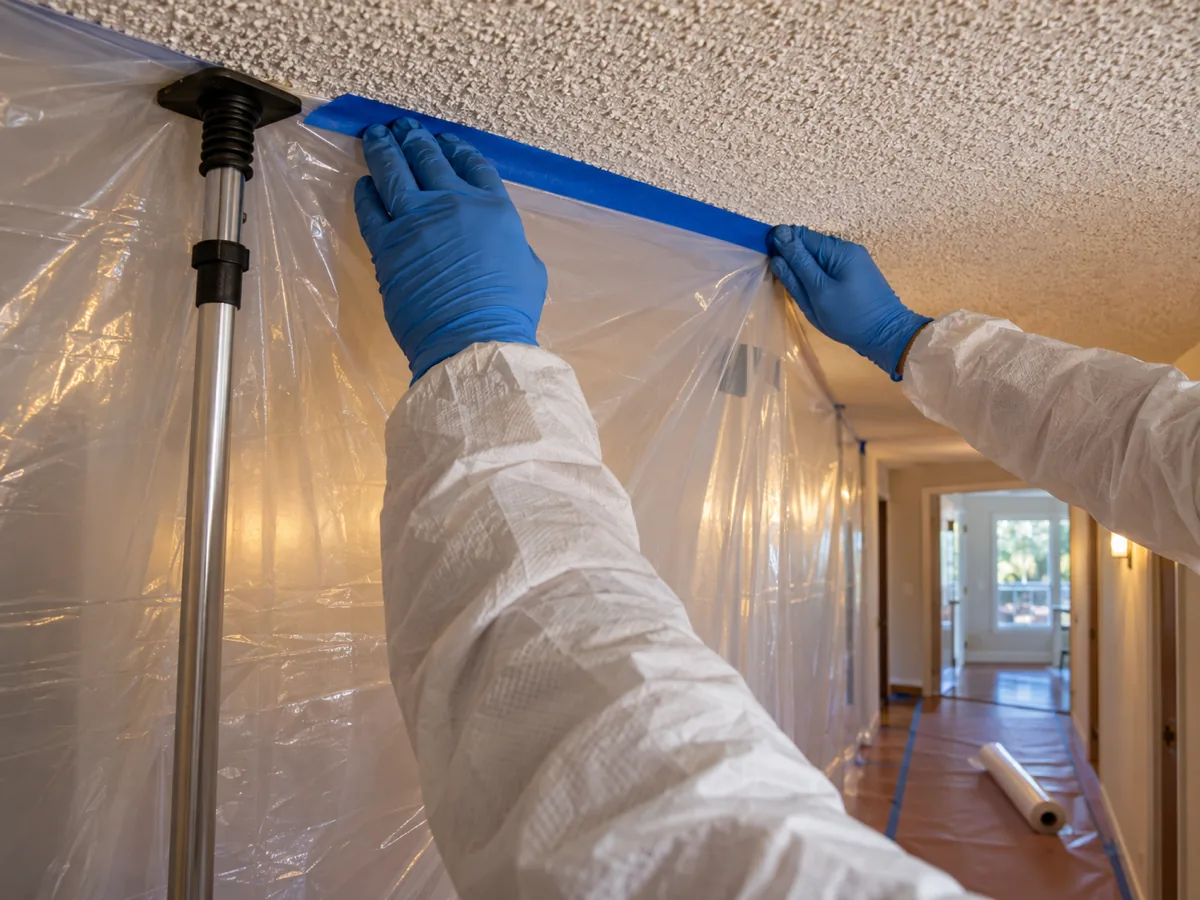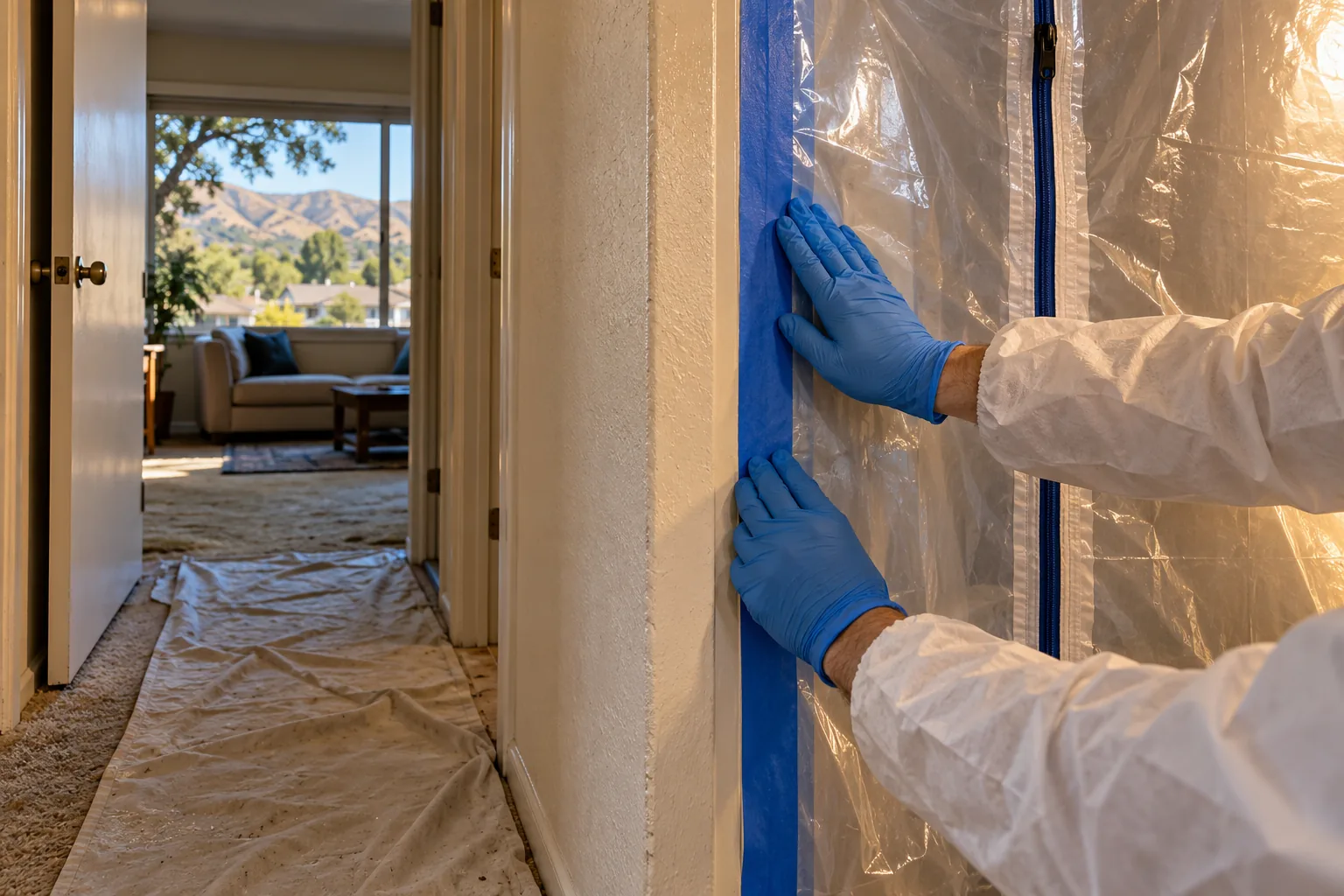

Gloved hands taping a plastic containment wall with a zipper door for mold remediation in a Thousand Oaks home

Professional Mold Remediation in Thousand Oaks, CA

Mold remediation for homes and businesses in Newbury Park, Dos Vientos, North Ranch, Westlake Village and the rest of the Conejo Valley. We seal off the moldy area, cut out what the mold has grown into, and find the water that fed it. Calls are answered 24/7.

  • Work area sealed before removal starts
  • Scope and price in writing first
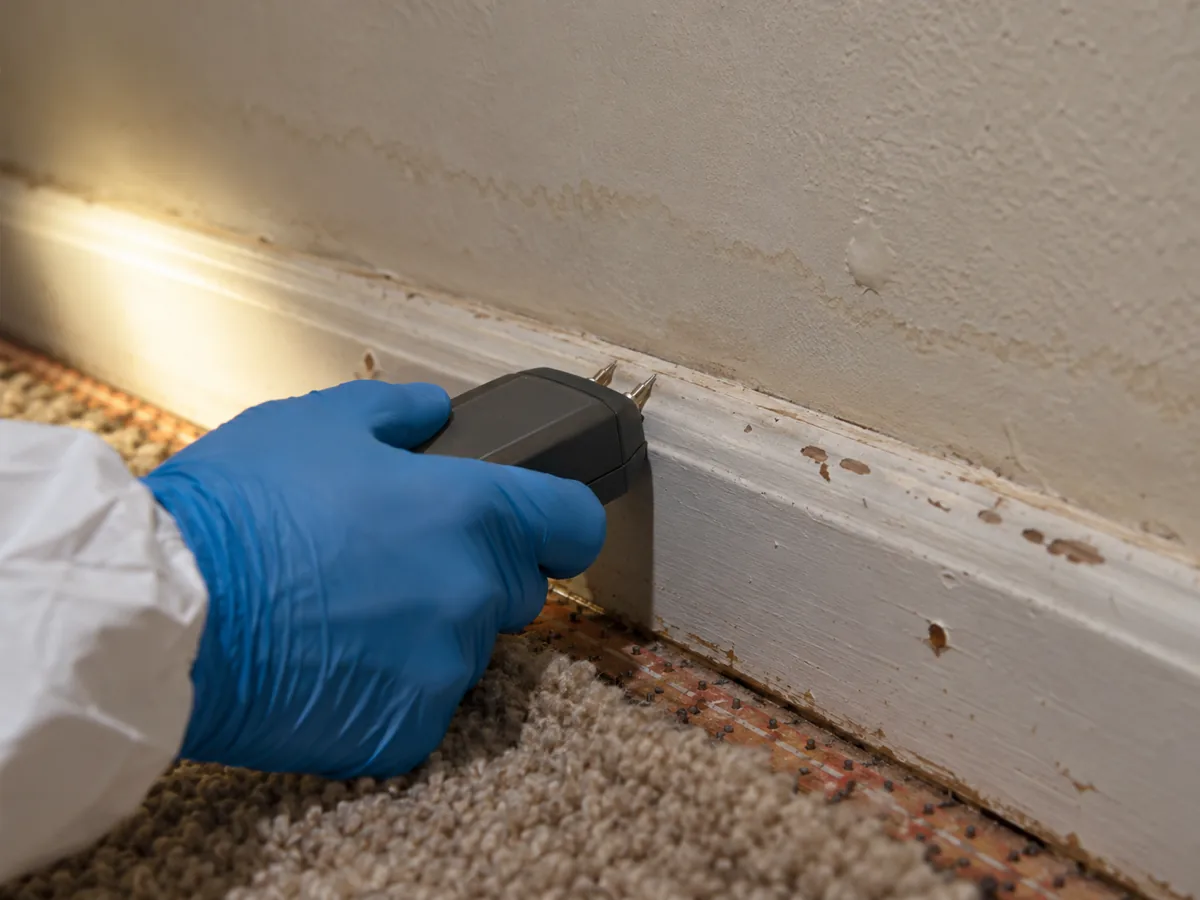
Gloved hand pressing a pin moisture meter to a stained baseboard to trace the water behind the mold
First visitWe trace the water with a moisture meter before anything is cut.
  • Calls answered 24/7Any hour, any day.
  • One marketThousand Oaks and the Conejo Valley.
  • Containment firstSealed under HEPA negative air.
  • Moisture sourceFound and put in writing.

Common Causes of Mold in Thousand Oaks Homes

Mold remediation in Thousand Oaks, CA means sealing off the moldy area, removing the growth and the drywall, insulation or wood it has rooted in, and finding the water that fed it. We do this work across the Conejo Valley. The cost comes mostly from how many square feet are affected and where they are.

Winter storm rain on a Thousand Oaks hillside street with wet pavement, overflowing gutters and green hills

Winter Storm Roof Leaks

Attics and top-floor ceilings

NOAA's Camarillo station, the nearest climate normals site, records 7.46 of its 12.01 inches of yearly rain in December through February. Much of it arrives in a few atmospheric-river storms, so a roof that leaks only in heavy rain can wet the attic for weeks before a ceiling stain shows.

  • Rain falls December to February
  • Attic wet before the ceiling shows it
Call about this
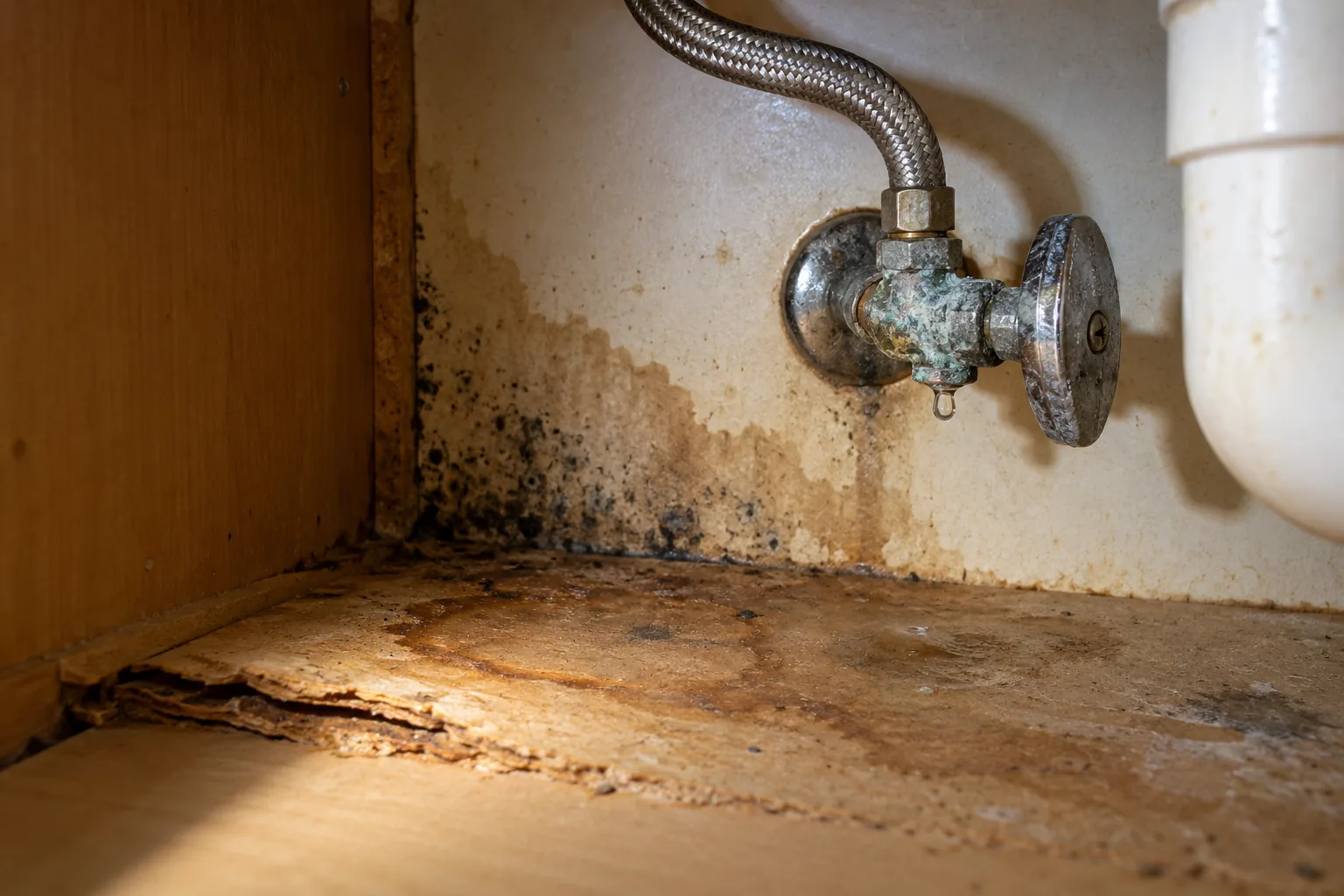
Corroded angle stop and supply line under a bathroom vanity with water stains and mold on the cabinet floor

Aging Shutoff Valves and Supply Lines

Under sinks and behind toilets

The Census Bureau puts the median Thousand Oaks home at 1978, and 15,675 of the city's 48,095 housing units were built in the 1970s. Original shutoff valves and supply lines in houses that age often drip slowly, and the cabinet floor stays wet for months.

  • Median home built 1978
  • Slow drips under vanities
Call about this
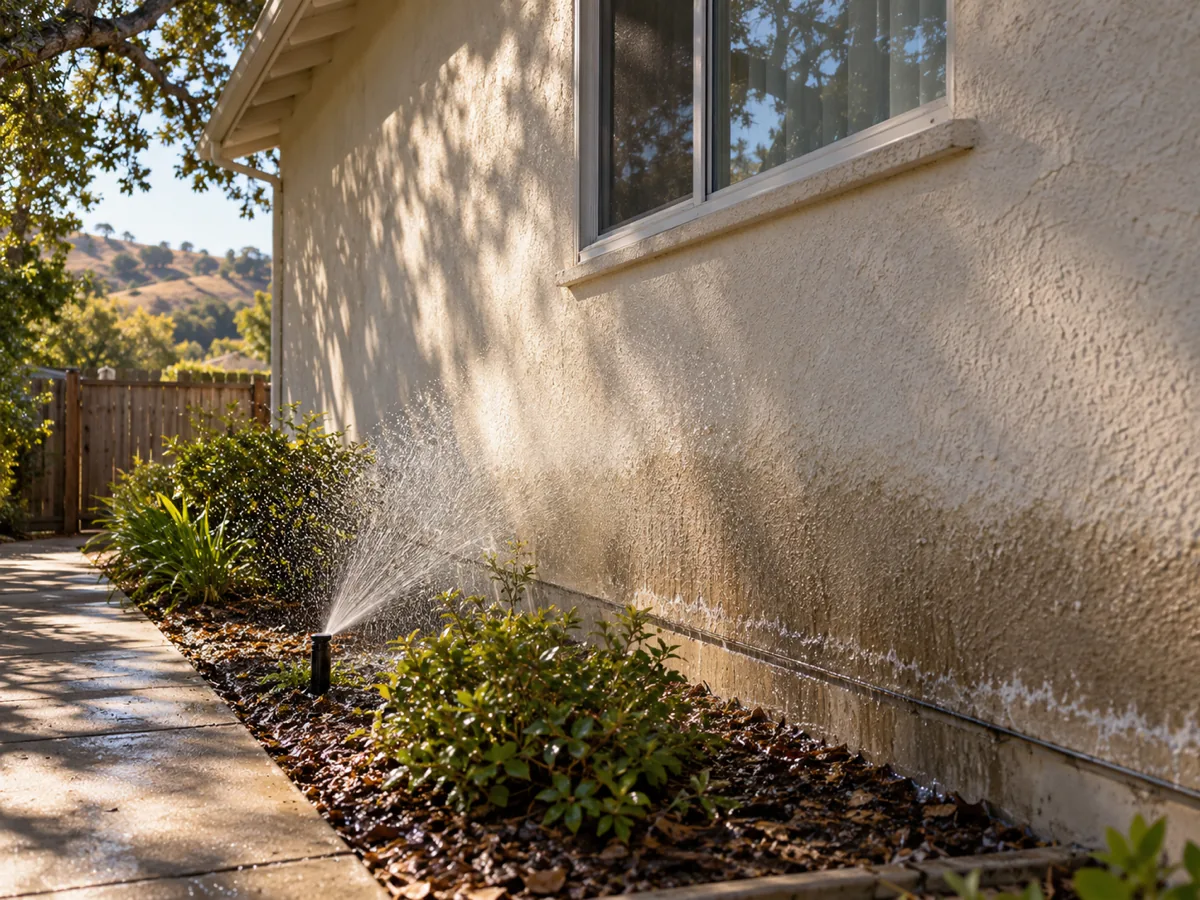
Sprinkler overspray darkening the stucco base and weep screed of a 1970s ranch house in Thousand Oaks

Sprinklers Hitting the Stucco

The base of outside walls

A sprinkler head that soaks the stucco every morning keeps the bottom of the wall damp. When we find mold low on an inside wall with no plumbing behind it, we look at the irrigation outside first.

  • Daily overspray
  • Mold low on the inside wall
Call about this
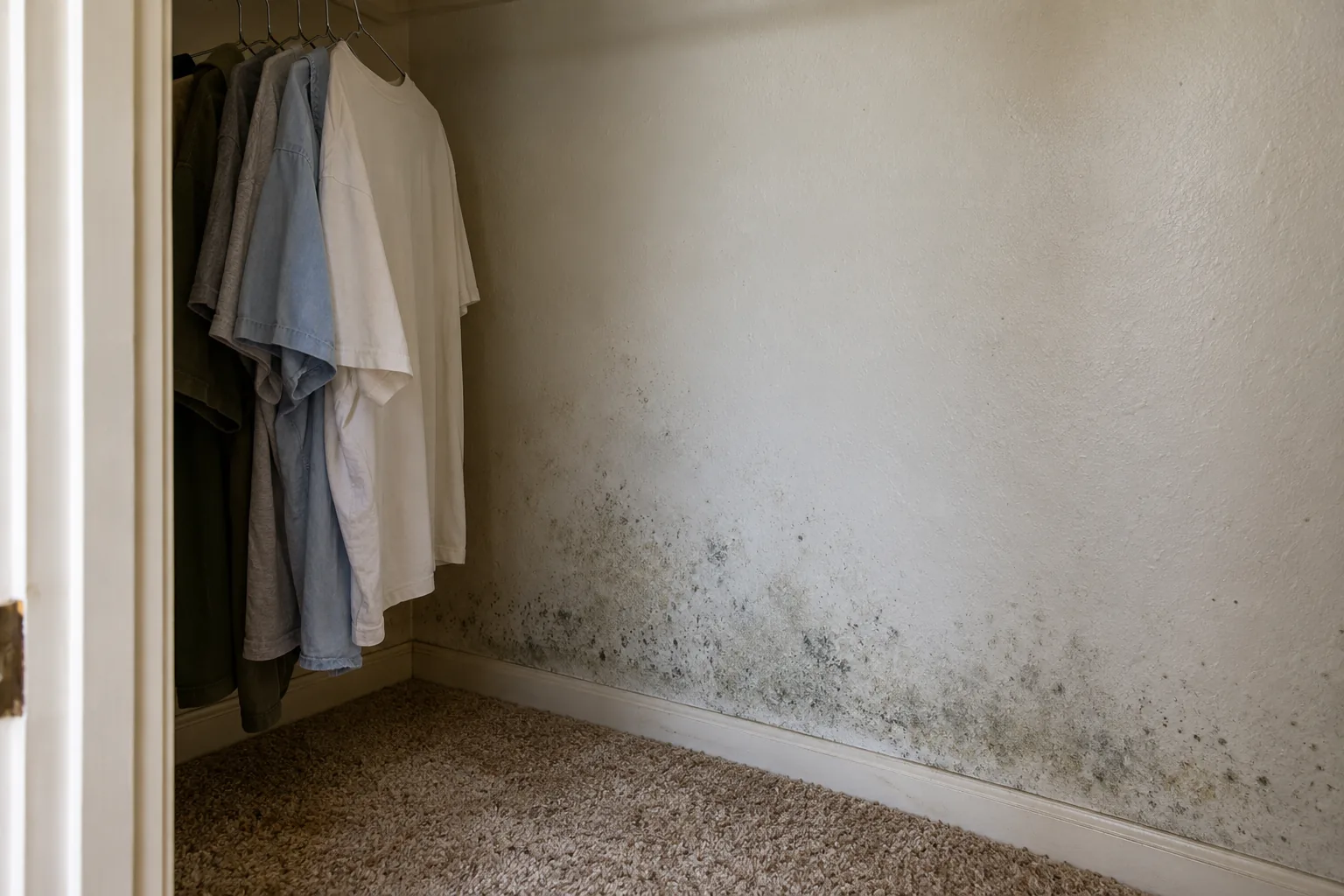
Grey-green mold spots low on a bedroom closet wall behind hanging clothes, a common source of a musty smell

Bathrooms and Closets With Still Air

Shower ceilings and outside-wall closets

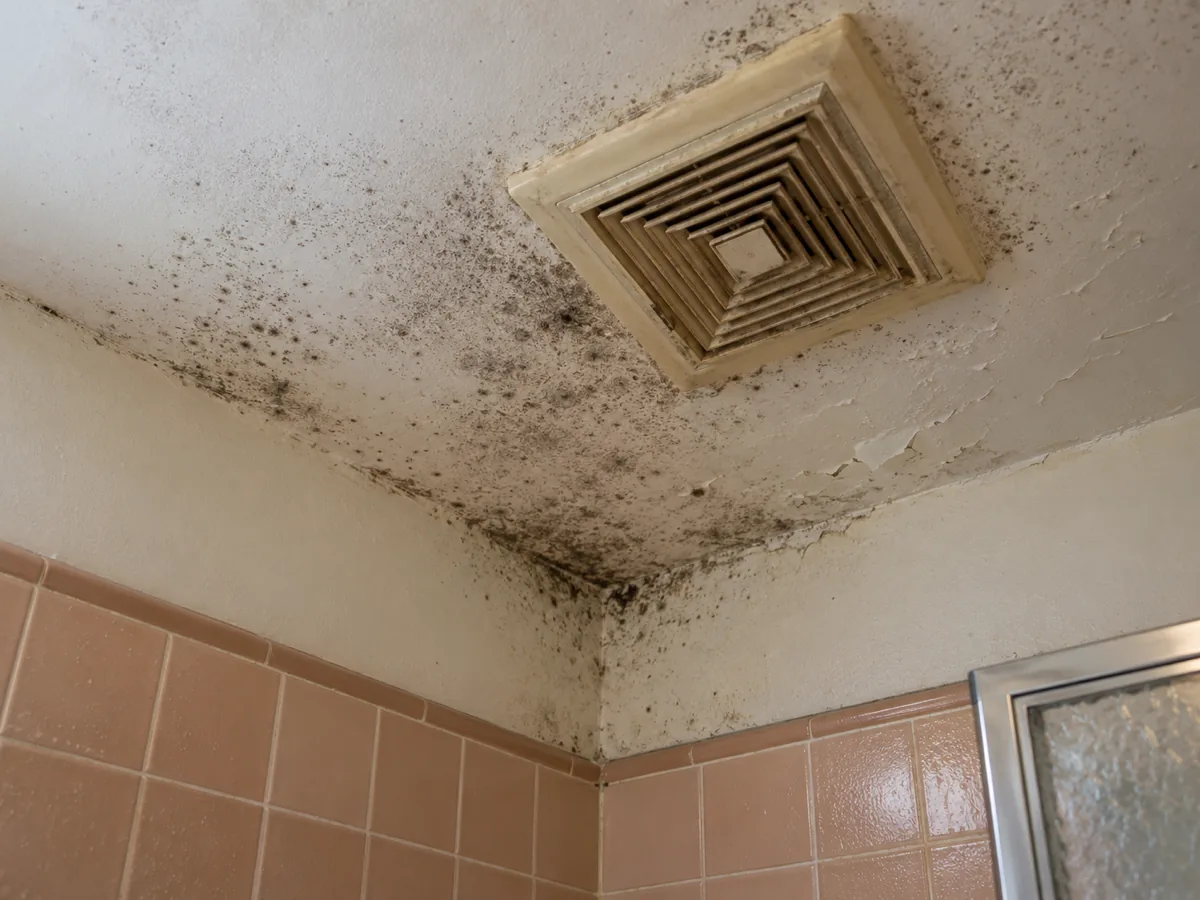
Growth above a shower usually means the exhaust fan is too weak or vents into the attic. A closet on an outside wall stays cooler and damper than the room, which is where a musty smell with no visible cause often leads us.

  • Weak exhaust fan
  • Cool, damp closets
Call about this

Our Mold Remediation Services

Every job is the same work in a different place: contain it, remove it, clean what can be saved and find the water.

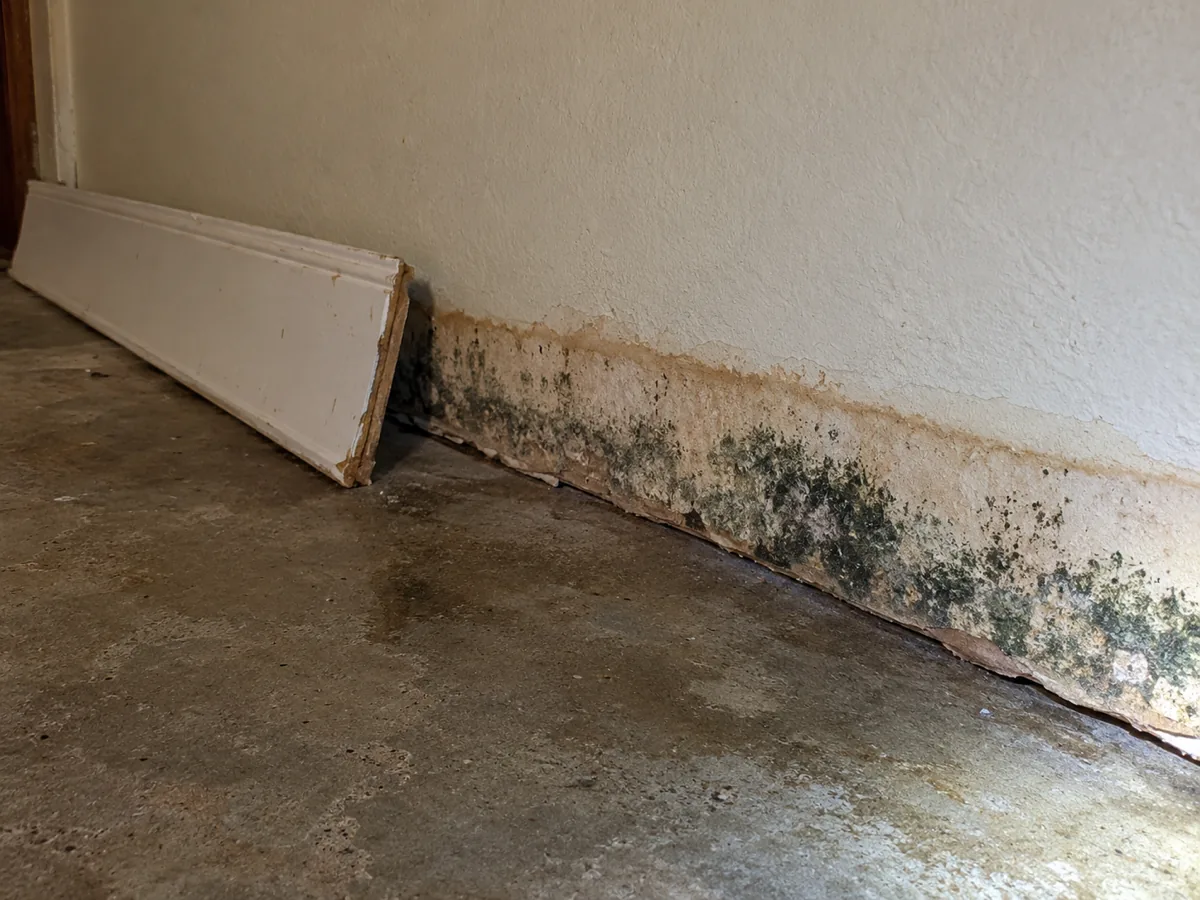
Black mold along the bottom of drywall behind a removed baseboard on a slab floor after a slow leak

Black Mold Removal

Dark growth behind a baseboard usually follows a slow supply or slab leak that kept the drywall edge wet. We remove black mold inside a sealed work area like any other mold, and cut the drywall out past the stain line.

  • Slow leak behind it
  • Cut past the stain line
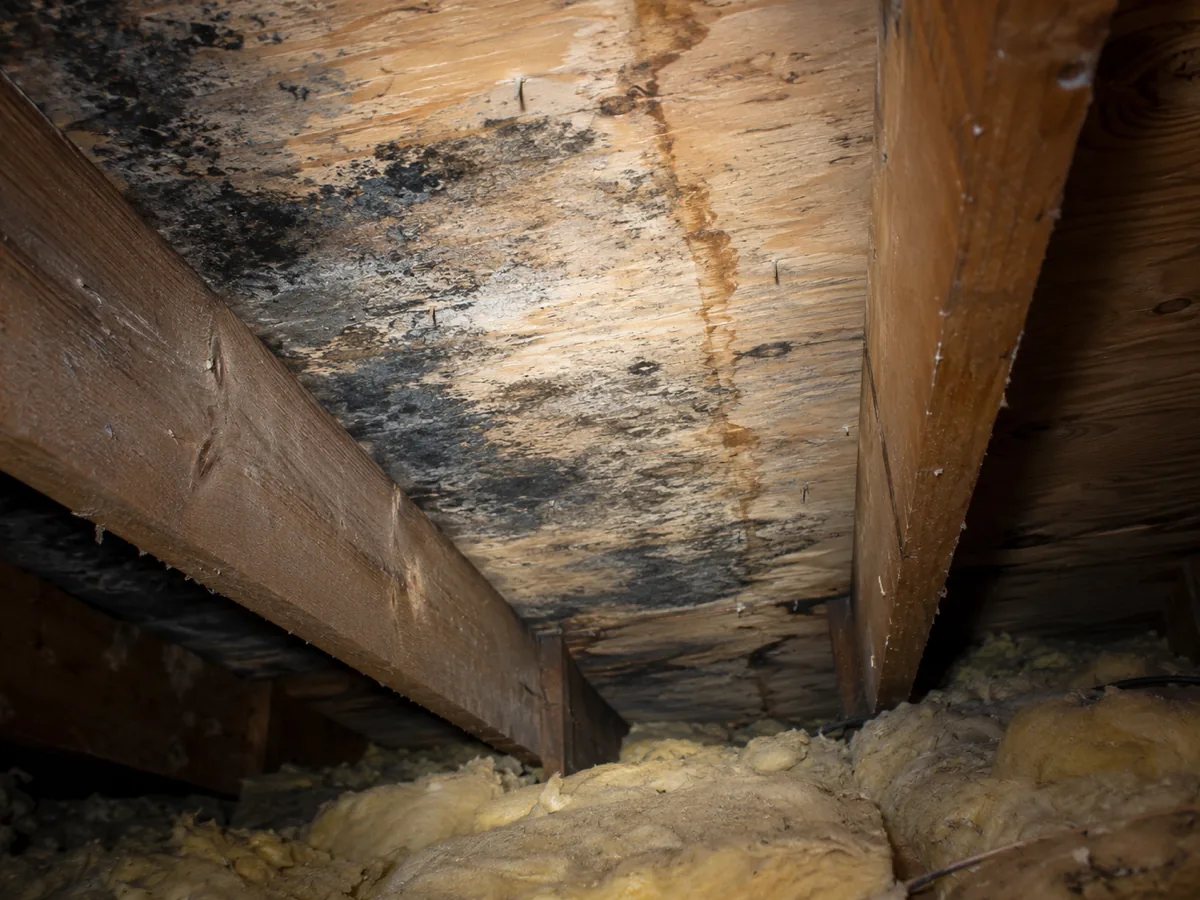
Dark mold staining on attic roof sheathing beside a rafter under a headlamp beam in a Thousand Oaks home

Attic Mold Remediation

We clean mold off the sheathing and rafters, remove wet insulation, and note in writing whether a roof leak or a bathroom fan venting into the attic caused it.

  • Sheathing cleaned
  • Cause noted in writing
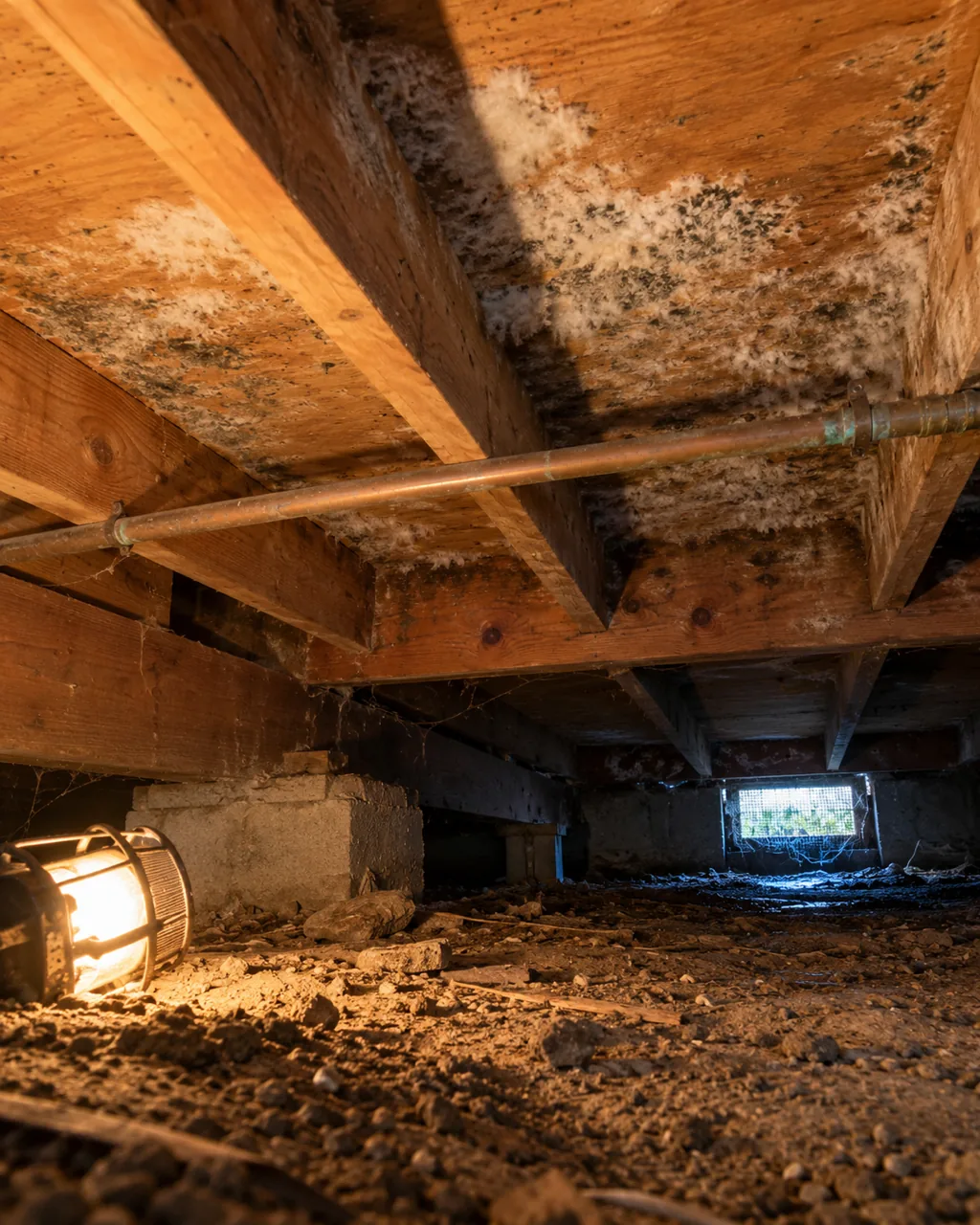
Mold on wood floor joists and subfloor in the crawl space of a raised-foundation Thousand Oaks home

Crawl Space Mold Remediation

Joists in a crawl space stay damp when irrigation or a leak wets the soil under the house. We clean the joists and subfloor and show you where the water comes in.

  • Damp joists
  • Water entry shown to you
Speckled mold on a bathroom ceiling above a shower next to an exhaust fan grille with peeling paint

Bathroom and Under-Sink Mold Cleanup

We seal the bathroom, remove the moldy cabinet floor or drywall, and mark the leaking valve for whoever repairs it. Landlords, HOAs and office tenants get the same method and written report.

  • Bathroom sealed
  • Leak marked for repair

Why Choose Us for Mold Remediation

Mold comes back when the water stays, so we run every job around finding it.

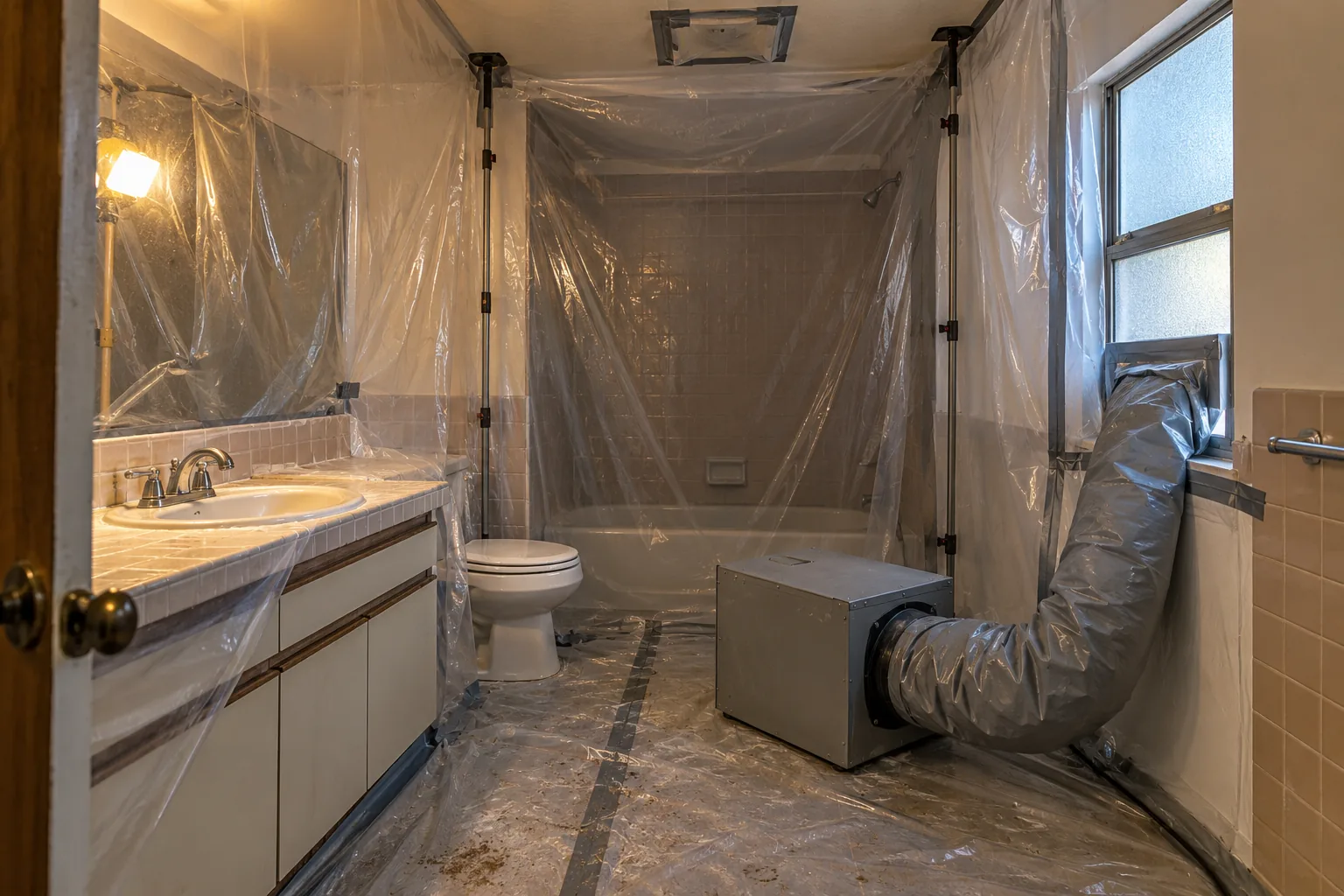
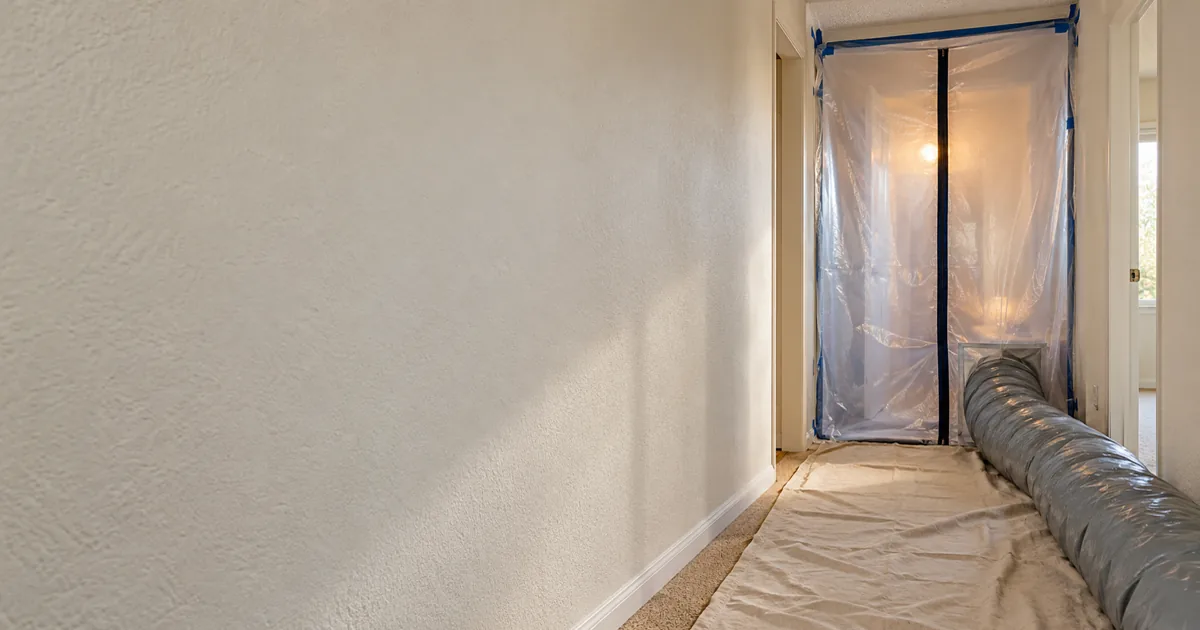
Bathroom sealed in plastic sheeting with a duct running from a HEPA negative air machine to a window
24/7Calls answered at any hour, including nights, weekends and holidays.
  • We Seal the Area First

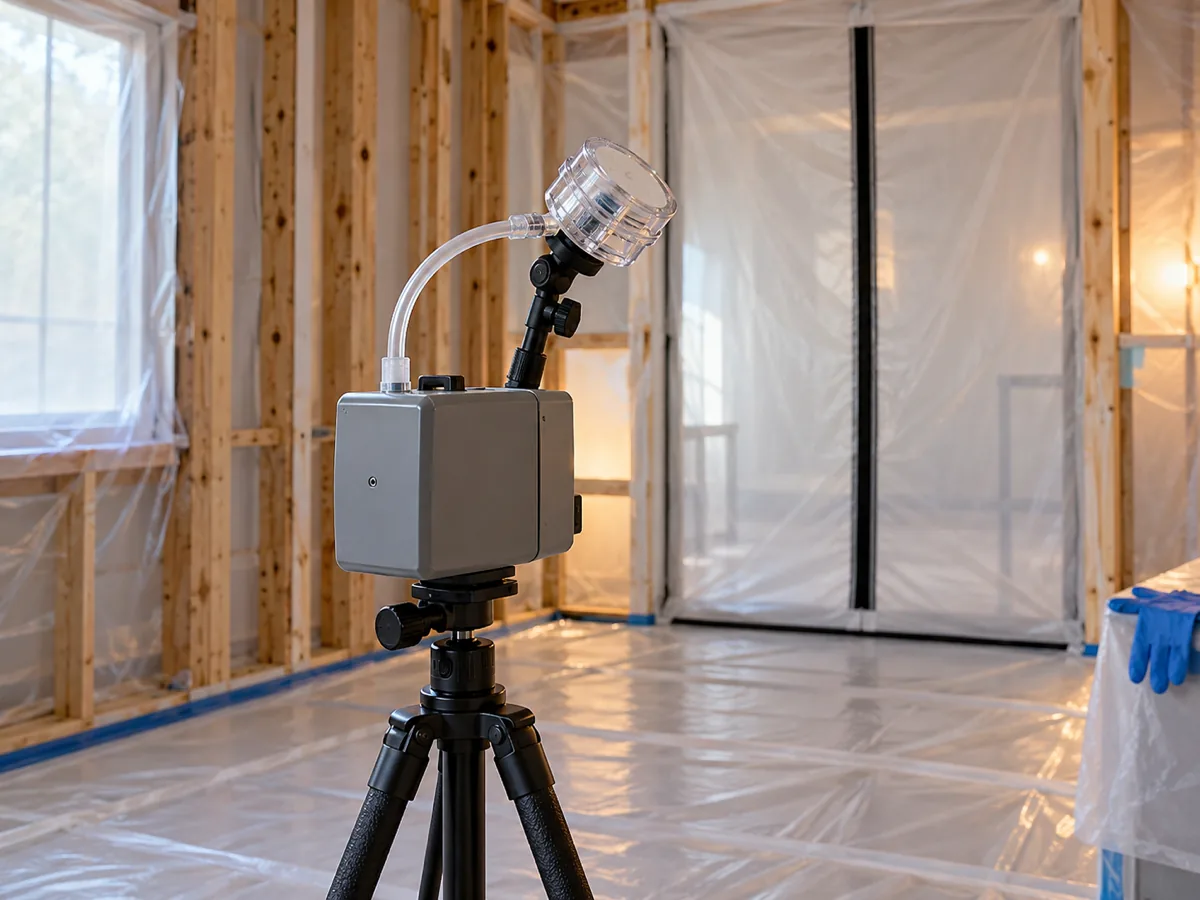
    Before we touch any moldy material, we put up plastic barriers and run HEPA-filtered negative air, so spores stay inside the work zone and out of the rest of your house.

  • We Find the Water and Write It Down

    We don't call a job finished until the moisture source is found and documented for you. The EPA says that if you clean up mold without fixing the water problem, the mold will most likely come back.

  • We Put the Scope and Price in Writing

    You get a written scope of work and a price from us before we cut anything, so you know which walls, ceilings or cabinets come out.

  • We Work One Market

    We work Thousand Oaks, Newbury Park, Westlake Village and the nearby Conejo Valley communities, and nowhere else.

Signs You Need Mold Remediation

Most mold calls start with a smell or a stain. Here is how to check each sign yourself.

A Musty Smell With No Visible Mold

Open the closets on outside walls and the cabinets under sinks, then sniff low near the floor. A smell that's strongest in one spot usually sits over the growth.

Spots That Come Back After Cleaning

If a patch you wiped grew back within weeks, the material behind it is still getting wet, and that moisture has to be found first.

Bubbling Paint or a Soft Wall Base

Press the drywall just above the baseboard with your thumb. If it gives, or the paint has blistered, water has been sitting in the wall cavity.

A Ceiling Stain After a Storm

A brown ring on a top-floor ceiling after winter rain means water got into the attic. Look up there with a flashlight for dark staining under the roof boards.

Growth Above the Shower

Hold a square of toilet paper to the exhaust fan grille while it runs. If the fan can't hold it up, it isn't pulling enough moist air out of the room.

A Leak Left Wet for Days

The EPA says to dry water-damaged materials within 24 to 48 hours to prevent mold. If a leak soaked drywall or carpet longer than that, check behind and under it.

Mold Remediation Cost in Thousand Oaks, CA

The square footage of growth sets most of the price, then where it is. These are published national ranges from Fixr's cost guide (updated August 29, 2025); your own price comes to you in writing first.

WorkWhat drives the priceTypical national range
Whole remediation jobAffected area, containment size, materials removed$1,500 to $9,000 (average $3,500)
Per square foot of affected areaSquare feet of growth, not the size of the house$10 to $30 per sq ft
Attic mold remediationSheathing area, insulation removal, access$1,500 to $9,000
Crawl space mold remediationJoist and subfloor area, crawl height$500 to $2,000

Our Service Areas in Thousand Oaks, CA and Nearby Communities

We cover every Thousand Oaks ZIP code and the Conejo Valley cities around them. Give us the street on the call and we'll plan the visit around it.

Single-storey stucco homes with tile roofs on a wide Conejo Valley street below oak-dotted hills
3areas of Thousand Oaks6cities next door

Thousand Oaks, by ZIP code

  • 91320

    Newbury Park and Dos Vientos

    west end of Thousand Oaks

    These neighborhoods are inside the city, so City of Thousand Oaks permit rules apply to any larger tear-out.

  • 91360

    Conejo Oaks and Old Town

    older central Thousand Oaks tracts

    In the city's older central tracts we check the original shutoff valves under every sink first.

  • 91362

    North Ranch, Sunset Hills and Lang Ranch

    east and north-east hillside areas

    On hillside lots, tell us whether the house sits on a slab or a raised foundation so we bring crawl space gear.

Nearby cities, by ZIP code

  • 91361, 91362

    Westlake Village

    separate city in Los Angeles County

    Permits here come through Los Angeles County, so a larger tear-out runs on the County's timing. More on our Westlake Village mold remediation work.

  • 91301

    Agoura Hills

    Los Angeles County, Santa Monica Mountains edge

    NOAA's Woodland Hills station records 16.41 inches of rain a year on this side, so roof and slope leaks show up more often. See our Agoura Hills mold removal work.

  • 91377

    Oak Park

    unincorporated Ventura County

    Water here comes from the Triunfo Water & Sanitation District, the call to make for a leak on the district's side of the meter. Read about mold remediation in Oak Park.

  • 93063, 93065

    Simi Valley

    separate valley city north-east of Thousand Oaks

    Golden State Water Company supplies Simi Valley, so a leak at the meter is theirs to shut off. More on Simi Valley mold remediation.

  • 93010, 93012

    Camarillo

    separate city west of the Conejo Grade

    Camarillo's Building & Safety Division takes plans digitally only, through its OpenGov system. See our mold remediation in Camarillo work.

  • Calabasas and Moorpark

    91302 and 93021 · separate cities east and north of the valley

    Calabasas is in Los Angeles County and Moorpark runs its own Building and Safety, so we confirm which office covers your address before a larger tear-out.

  • Thousand Oaks Civic Arts Plaza
  • Los Robles Hospital & Medical Center
  • California Lutheran University
  • The Oaks
  • Conejo Creek North Park
  • Borchard Community Park
  • Dos Vientos Community Park
  • North Ranch Park
  • Lang Ranch Neighborhood Park
  • Lake Sherwood

Our Mold Remediation Process

We follow the order the California Department of Public Health recommends: correct the water, dry or remove damp materials, then clean or remove the mold. The IICRC S520 mold standard sets out the same containment-first sequence.

  1. 1

    We trace the water first

    We trace the water with a moisture meter before anything is cut. You'll see us press the meter into drywall around the stain, because the wet area is usually larger than the mold you can see.

  2. 2

    We write the scope and price

    The written scope lists every wall, ceiling or cabinet we plan to remove and where the water is coming from. You see it, with the price, before remediation begins.

  3. 3

    We seal the work area

    We run plastic sheeting floor to ceiling, tape every edge and add a zipper door. A HEPA air machine pulls air out of the sealed area and vents it outside, so the plastic bows slightly inward.

  4. 4

    We remove what the mold has grown into

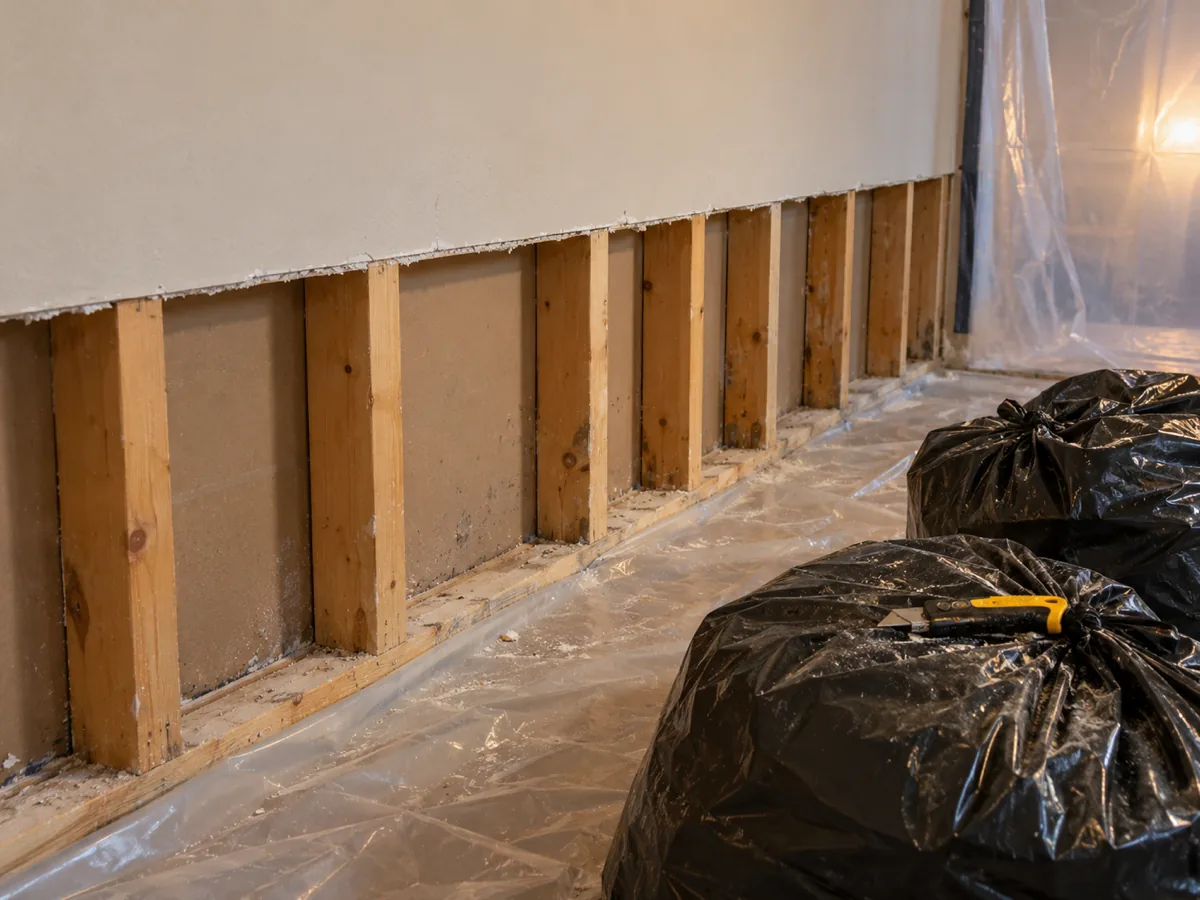
    Drywall, insulation and carpet pad with growth in them can't be cleaned, so we cut them out past the stain line and bag them inside the containment. Our crew wears respirators, gloves and suits throughout.

  5. 5

    We clean and dry what stays

    We HEPA-vacuum the framing, wipe it with an antimicrobial cleaner, and run a dehumidifier until the wood is dry. The EPA's indoor target is below 60 percent humidity, ideally 30 to 50 percent.

  6. 6

    We verify before the plastic comes down

    We check the cleaned area by eye and with the meter. If you or your insurer want it documented, we compare an air sample inside with one taken outdoors.

  7. 7

    We hand you the moisture report

    You keep the written record of where the water came from. Your plumber or roofer fixes the leak, and the rebuild starts once the area is dry. Read more on how we run a mold job.

What to Do Before Our Crew Arrives

Five things that keep the mold where it is while you wait.

  1. Leave the mold alone

    Don't scrub, sand or spray bleach on it, because dry scrubbing throws spores into the air.

  2. Stop the water if you can

    Close the shutoff valve under the sink or toilet, or the main if the leak is inside a wall.

  3. Close the door to the room

    Keep fans pointed away from the mold so air doesn't carry spores out.

  4. Turn off the air conditioning

    If the room has a supply vent, switch the system off so the ducts don't spread spores.

  5. Take photos

    Photograph the mold, the stain and the leak before anything moves, because insurers ask for them.

How Insurance Treats Mold Remediation

Whether a policy pays comes down to how the water got in, according to the California Department of Insurance.

Sudden Water Is Usually Covered

The Department lists sudden and accidental water damage, such as a burst pipe, among the perils a homeowners policy typically covers. Mold that follows that kind of event is the case to raise with your insurer.

Mold and Slow Leaks Usually Aren't

The same guide lists mold, water damage from seepage or leaks, and flood among the perils generally not covered. A drip that ran under a vanity for months usually falls here.

A Written Report for Your File

Our moisture report records where the water came from. The claim is between you and your insurer, and the decision to file stays with you.

Permits and California Rules for Mold Work

Most mold jobs need no permit. These rules come into play when a job is larger, when a contractor is hired or when the home is rented.

Removing Part of the Building

When a job goes past cutting drywall into removing part of the structure, the City of Thousand Oaks requires a separate demolition permit. It is issued only after Public Works approves a debris recycling plan and the Ventura County Air Pollution Control District signs Form AB3205.

Contractor License Above $1,000

The Contractors State License Board raised the minor-work exemption to $1,000 on January 1, 2025. A license is still required on smaller jobs that need a permit or when the person hires workers.

Mold in a Rental

Under the California Health and Safety Code, visible mold confirmed by a health officer or code enforcement officer can make a building substandard. Landlords also owe tenants written disclosure of known mold that poses a health threat.

Call for 24/7 Mold Remediation

Tell us where you see or smell the mold and when the leak started, and we'll tell you what to close off until we get there.

Call (805) 261-5870
Plastic containment wall with a zipper door sealing a room for mold remediation in a Thousand Oaks home

Mold Remediation FAQs

Short answers to what Conejo Valley homeowners ask us most.

Have a question that is not listed here?

(805) 261-5870Call now

What's the difference between mold removal and mold remediation?

Removal usually means cleaning off the growth you can see. Remediation seals the area, removes the materials the mold has grown into, cleans what stays and deals with the water, which is why it lasts.

Is mold remediation a rip-off?

No, when the scope and price are written down and the water source is named. Be wary of a quote that lists treatments but never says where the moisture comes from, because that mold will most likely return.

Should I have the mold tested before I call?

Usually not. The California Department of Public Health recommends against using mold measurements to decide whether remediation is needed. Visible growth and a moisture source are enough. Sampling helps when an insurer, landlord or buyer wants it documented.

Can I clean up mold myself?

Yes, for a small patch. The EPA says that if the moldy area is less than about 10 square feet, roughly 3 feet by 3 feet, you can handle the job yourself in most cases. Larger areas, or mold inside walls, call for containment.

Is black mold more dangerous than other mold?

We handle every species the same way. The California Department of Public Health advises against using the presence of a specific mold to judge the health hazard, and recommends fixing the water and removing the mold whatever its color.

Do I have to disclose mold when I sell my house?

Yes, if you know about it. Item C.1 of the California Transfer Disclosure Statement asks sellers about environmental hazards and names mold, and item C.8 asks about drainage problems. Our written moisture report helps you answer both.

Call for Mold Remediation in Thousand Oaks, CA

Mold left behind a wall keeps growing as long as the water reaches it. Call Thousand Oaks Mold Remediation, tell us what you're seeing, and we'll set up a visit to find the water and write up the scope.

Call (805) 261-5870